Drip Coffee vs. French Press: The Ultimate Guide to Brewing Methods, Bean Selection, and Your Perfect Cup
You’ve got great beans, a trusty grinder, and you follow all the ‘rules’… yet sometimes your morning cup just isn’t hitting that sweet spot. Is it you? Is it the beans? Or is it something more fundamental about how you’re brewing? Often, the secret to truly unlocking your coffee’s potential lies not just in what you use, but in understanding the distinct philosophies of two home brewing titans: Drip Coffee and the French Press. They both promise deliciousness, but deliver wildly different experiences.
Ready to stop guessing and start brewing coffee that consistently makes you say “Wow”? We’re diving deep into the science, the grind, the beans, and even the hidden health impacts to help you master both methods and definitively choose your perfect daily brew. No snobbery, just science and delightful sips.
The Science of Extraction: Immersion vs. Percolation Explained
Coffee extraction is the process of dissolving desirable flavor compounds from coffee grounds into water. Immersion and percolation are two fundamental brewing dynamics that drastically alter how these compounds are drawn out, defining your cup’s final character.
Ever wondered why a French Press coffee tastes so different from a cup made in your drip machine, even if you use the same beans? It all comes down to these two scientific approaches. Let’s break down how immersion (French Press) and percolation (Drip Coffee) brewing methods affect extraction and the resulting flavor profile.
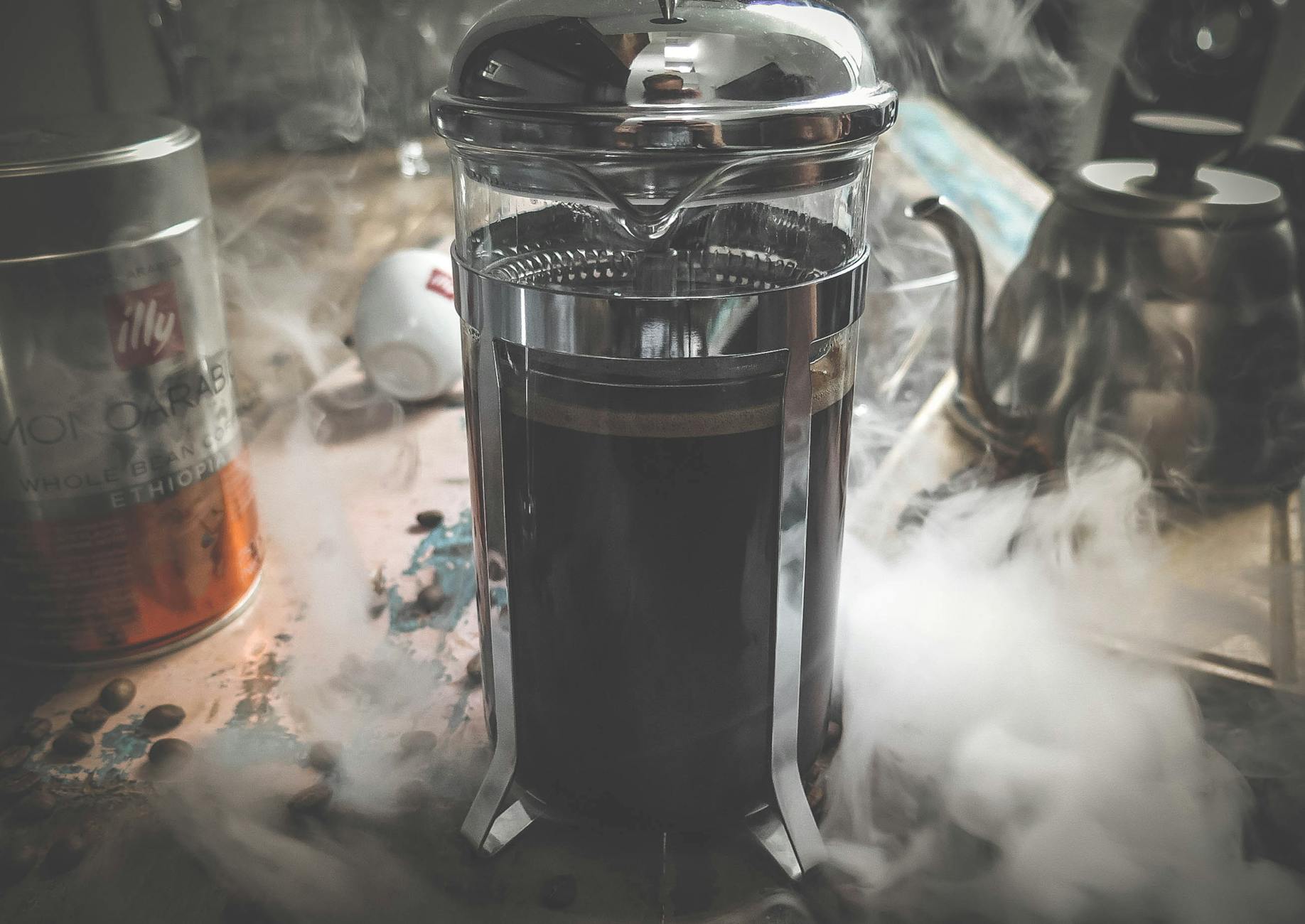
French Press: The Immersion Method
Imagine throwing all your coffee grounds into a pool of hot water and letting them soak for an extended period. That’s precisely what happens in a French Press. It’s a full-immersion method where coffee grounds and water remain in complete contact for the entire brew time. This intimate, prolonged interaction allows the water to fully saturate every particle, drawing out a wide range of soluble compounds.
- Extraction Dynamics: Because the grounds are fully submerged, the extraction process is comprehensive. This leads to a brew that is typically full-bodied, rich, and often described as viscous or heavy on the palate. More fine particles and insoluble oils are suspended in the final cup, contributing to its characteristic mouthfeel and sometimes a slight “cloudiness.” It’s this direct, unfiltered contact that gives French Press its bold, robust signature.
Drip Coffee: The Percolation Method
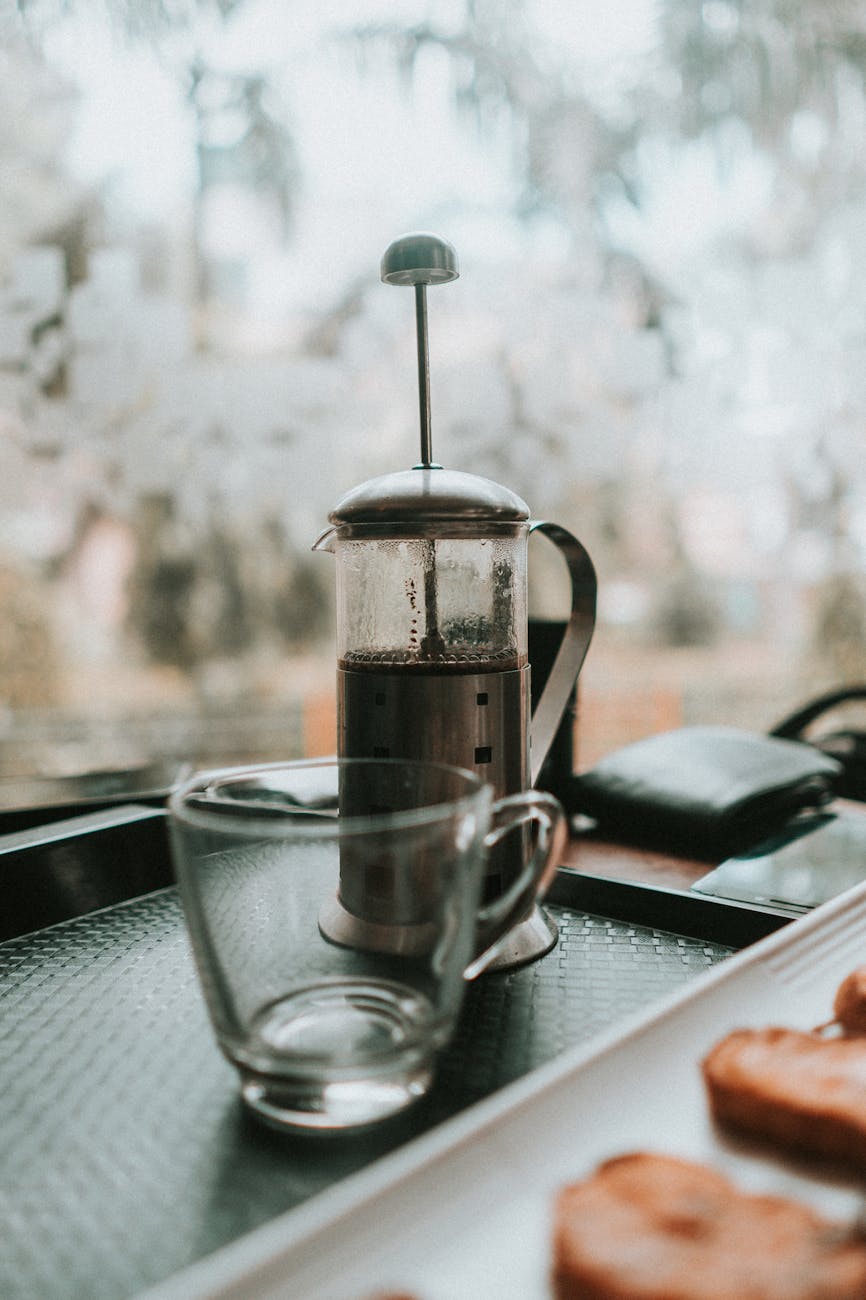
Now, picture hot water slowly trickling through a bed of coffee grounds, passing through once and then draining away. That’s percolation, the principle behind your drip coffee maker. Here, hot water has relatively brief contact with the coffee grounds as it flows through them, selectively extracting soluble compounds along its path.
- Extraction Dynamics: As water “percolates” or drips through the coffee bed, it extracts compounds in a more layered fashion. The result is typically a cleaner, brighter, and often crisper cup. The flow rate, water temperature, and coffee bed depth all play crucial roles in how efficiently these compounds are extracted, shaping the final flavor.
- Molecular Perspective: The different contact times and filtration types influence which specific compounds make it into your cup. Acids tend to extract earlier, contributing brightness. Sugars follow, adding sweetness. Finally, bitter compounds are extracted if the process goes too long. Immersion methods often pull more of the heavier oils and suspended solids, which contribute to body, while percolation, especially with paper filters, tends to leave these behind, emphasizing clarity and nuanced flavors.
Further Reading: To truly grasp how different molecules contribute to your coffee’s taste, delve deeper into the chemistry of coffee extraction.
Grind Matters: Optimal Grind Size for French Press vs. Drip Coffee
Grind size is perhaps the single most critical factor in achieving a balanced extraction, regardless of your brewing method. It directly influences the surface area of the coffee particles, the contact time between water and coffee, and, for percolation methods, the flow rate of the water through the coffee bed.
So, what is the optimal grind size for French Press versus drip coffee, and why does it matter so much? Let’s explore.
French Press Grind: Coarse and Uniform
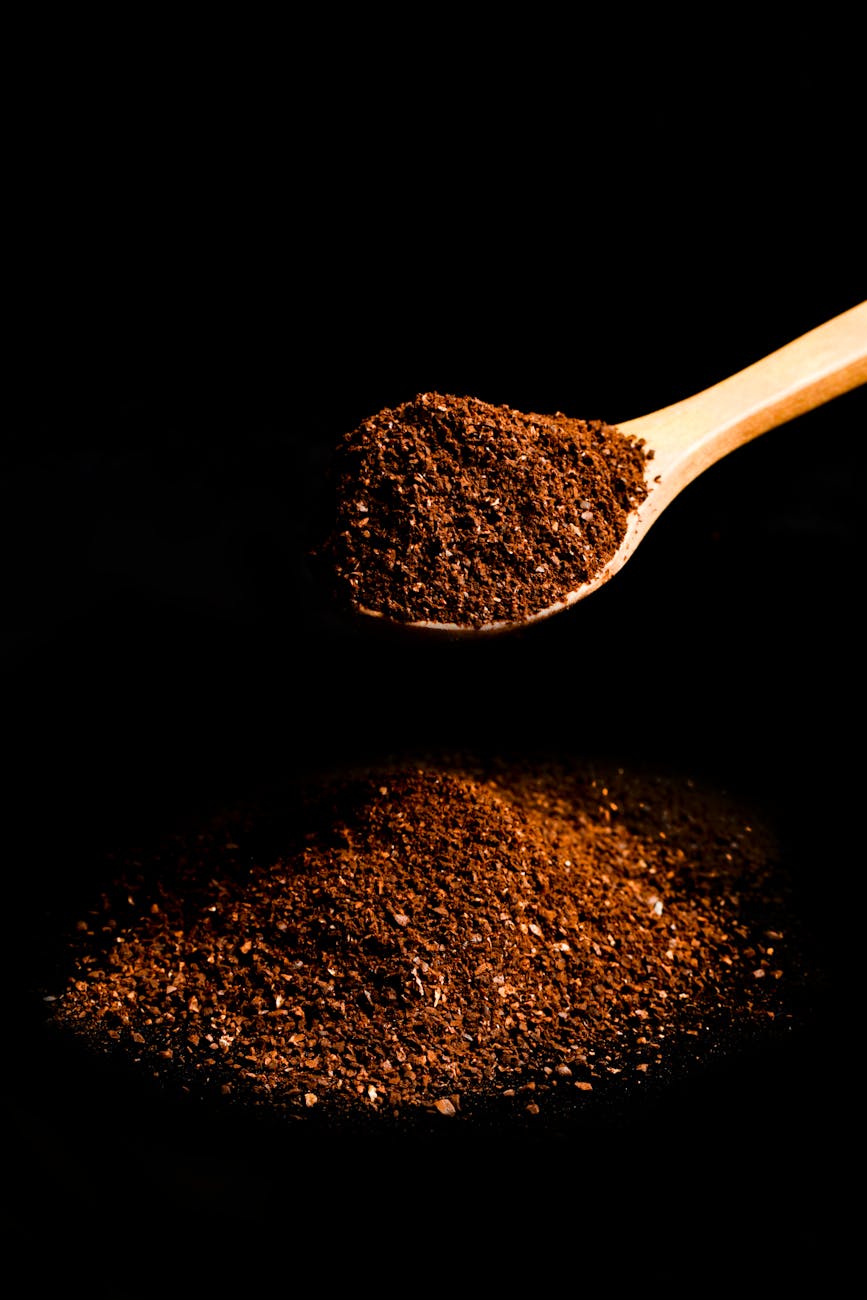
For the full immersion experience of a French Press, you need a coarse and uniform grind.
- Why Coarse?: A coarse grind is essential for a few reasons. First, the extended contact time in a French Press (typically 3-5 minutes) means finely ground coffee would quickly over-extract, leading to an unpleasantly bitter and astringent brew. Second, a coarse grind prevents excessive “sludge” or fine particles from passing through the metal mesh filter, ensuring a cleaner, albeit still full-bodied, cup. Imagine it like trying to filter sand versus pebbles – the pebbles allow water to pass more freely, and less material slips through.
- Visual Example: Think of coarse sea salt or breadcrumbs. The particles should be distinct and not feel dusty.
Drip Coffee Grind: Medium and Consistent
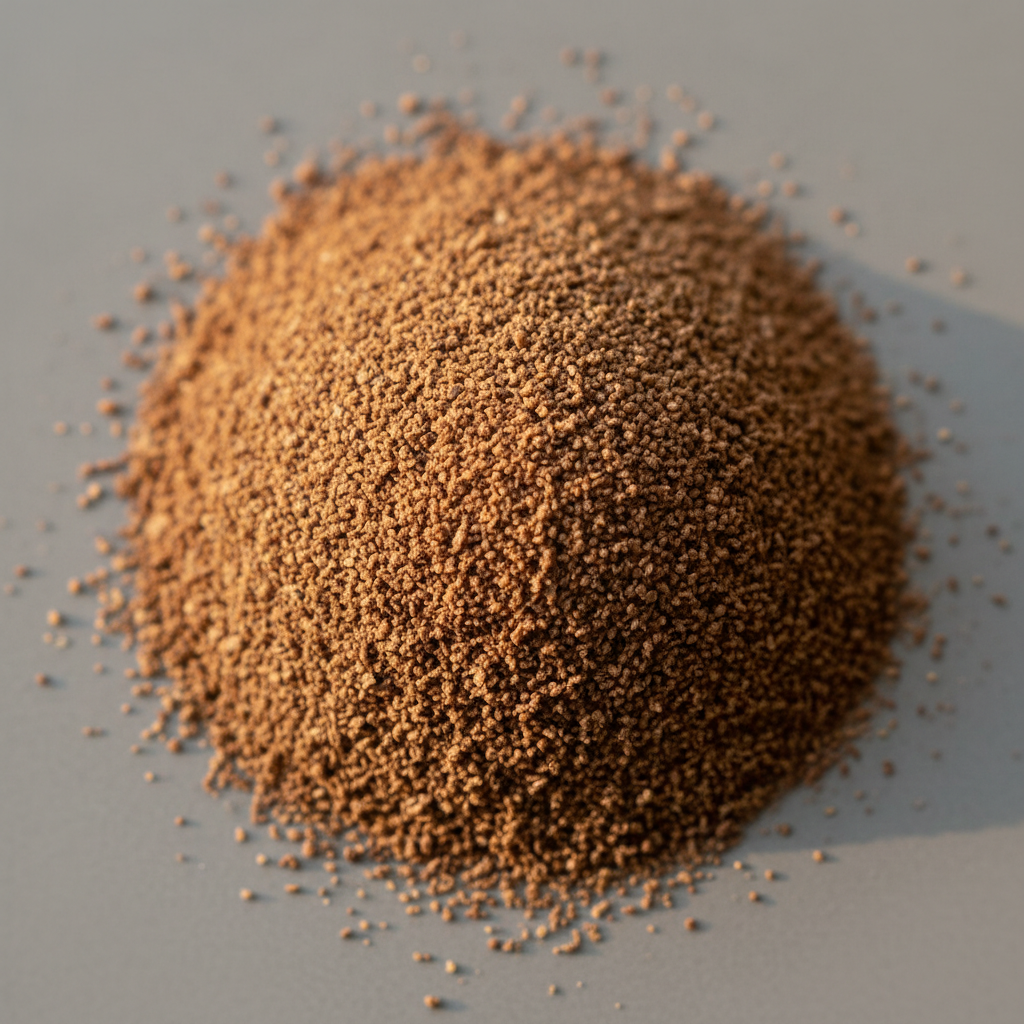
Drip coffee, with its percolation method, requires a medium and consistent grind.
- Why Medium?: This grind size strikes the perfect balance for the shorter contact time and filtered nature of drip brewing. If the grind is too fine, the water will have trouble flowing through the coffee bed, leading to over-extraction, clogging, and channeling (where water finds paths of least resistance, leaving some grounds under-extracted). Too coarse, and the water will pass through too quickly, resulting in an under-extracted, weak, and sour cup. A medium grind allows for optimal extraction as the water passes through.
- Visual Example: Picture table salt or regular sand. The particles are smaller and more uniform than French Press grind, but not powdery.
The Impact of Inconsistent Grind
Regardless of the method, an inconsistent grind is the enemy of a good cup. If your grinder produces a mix of fine dust and large chunks (often called “boulders”), you’ll end up with a brew that is both under-extracted (from the boulders) and over-extracted (from the fines). This often manifests as a cup that is simultaneously bitter and sour, lacking balance and clarity.
Pro Tip: Investing in a quality burr grinder is truly one of the best upgrades for consistent, delicious coffee. A consistent grind particle distribution is a cornerstone of precise coffee extraction, ensuring every particle contributes evenly to your brew.
Want more visuals for other brewing methods too? Check out our ultimate coffee grind chart for a comprehensive guide.
Bean Selection and Roast Levels: Tailoring Beans for Each Method
You wouldn’t use the same cut of meat for a quick stir-fry as you would for a slow-cooked stew, right? The same principle applies to coffee beans and brewing methods. The type of bean, its origin, and especially its roast level can dramatically influence how it performs in a French Press versus a drip coffee maker. Understanding this helps you make truly informed choices, moving beyond generic “high-quality beans” to finding the perfect beans for your chosen method.
So, are certain types of coffee beans or roast levels better suited for French Press versus drip coffee, and what does ‘high-quality beans’ mean in this context?
Defining ‘High-Quality Beans’
Before we dive into specifics, let’s clarify what we mean by ‘high-quality beans’. It’s about more than just a fancy bag. It encompasses:
- Freshness: Beans roasted recently (ideally within 2-4 weeks) and stored properly.
- Origin: Specific regions (e.g., Ethiopian Yirgacheffe, Colombian Supremo) offering unique flavor profiles.
- Processing: How the coffee cherry was processed (washed, natural, honey) impacts taste.
- Ethical Sourcing: Supporting sustainable practices and fair wages for farmers.
Beans for French Press: Embracing Fullness and Boldness
The French Press, with its full immersion and minimal filtration, is a champion of fullness and boldness. It allows the coffee’s natural oils and dissolved solids to remain in the brew, creating a richer mouthfeel.
- Ideal Roast Levels: Medium to dark roasts often shine in a French Press. These roasts develop deeper, more caramelized sugars and a heavier body that stands up beautifully to the immersion method. Light roasts can sometimes taste a bit “thin” or overly acidic in a French Press due to the unfiltered nature.
- Flavor Profiles: Look for beans with chocolaty, nutty, caramel, or earthy notes. These robust flavors are accentuated by the French Press’s ability to deliver a heavy, syrupy body. Many people prefer blends for French Press, as they are often crafted to achieve a balanced, consistent flavor profile that is excellent for a daily, strong cup. Single origin coffees with these characteristics also excel.
Beans for Drip Coffee: Highlighting Clarity and Nuance
Drip coffee, especially when brewed with a paper filter, is all about clarity and nuance. It filters out the heavier oils and sediments, allowing delicate aromatics and specific origin characteristics to take center stage.
- Ideal Roast Levels: Light to medium roasts tend to be fantastic for drip coffee. These roasts preserve more of the coffee bean’s inherent acidity and complex aromatic compounds, which are beautifully highlighted by the cleaner extraction.
- Flavor Profiles: This is where fruity, floral, citrusy, or brighter notes truly sing. Think of single origin coffees from places like Ethiopia or Kenya, known for their vibrant, complex profiles. The drip method emphasizes cleanliness and allows these delicate aromas to flourish without being overshadowed by a heavy body or darker roast characteristics.
Experimentation: Your Personal Flavor Journey
Ultimately, the “best” bean is the one you enjoy the most. We strongly encourage you to experiment! Try brewing your favorite light roast in a French Press to see how its acidity and body change, comparing it to the same beans in a drip maker. Or, take a dark roast to your drip machine and see if you can pull out surprising nuances. Record your sensory experiences – you might discover surprising combinations that become your new go-to.
To truly elevate your choices beyond generic “high-quality beans,” explore our guide to choosing the best coffee beans for your method.
The Unfiltered Truth: Filter Types, Taste, and Health Implications
Beyond the grind and the beans, the filter—or lack thereof—plays an enormous role in shaping your coffee experience. It impacts not only the taste and texture of your brew but also has fascinating implications for your health. Let’s pull back the curtain on the French Press’s metal mesh versus the drip coffee maker’s paper filter.
What are the pros and cons of each brewing method, considering the impact of filter types (paper vs. metal mesh) on taste and health?
French Press: The Metal Mesh Filter
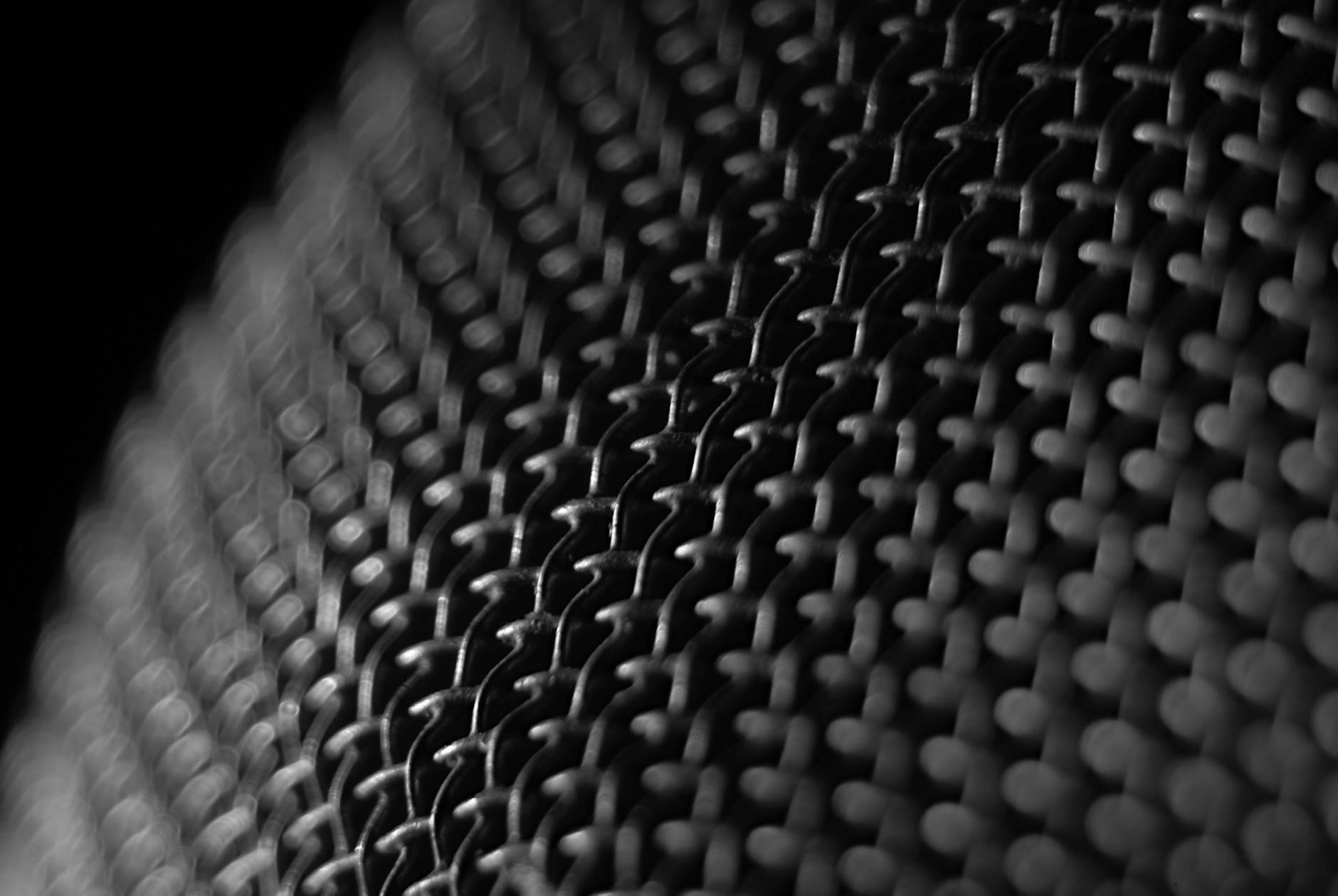
The iconic French Press uses a metal mesh filter attached to its plunger. This filter is designed to keep the majority of the coarse grounds out of your cup while allowing everything else through.
- Impact on Taste: This is where the French Press gets its signature full-bodied flavor and robust aroma. The metal mesh allows most of the coffee’s natural oils (lipids) and a small amount of fine sediment (micro-grounds) to pass into your cup. These elements contribute significantly to the coffee’s rich mouthfeel, sweetness, and depth of flavor. However, it can also result in a slightly cloudier appearance and a grittier texture at the very bottom of the cup, which some love and others prefer to avoid.
- Health Considerations: The presence of these unfiltered oils brings us to diterpenes, specifically cafestol and kahweol. These natural compounds are found in coffee beans and are particularly concentrated in the oily components. Studies indicate that regular consumption of unfiltered coffee, like French Press, can lead to a modest increase in LDL (“bad”) cholesterol levels – typically within a range of 8-10% for individuals consuming 4-6 cups daily. While this effect is generally minor for most healthy individuals, it’s a noteworthy consideration, particularly for those with existing cardiovascular concerns or a family history of high cholesterol.
Drip Coffee: The Percolation Method
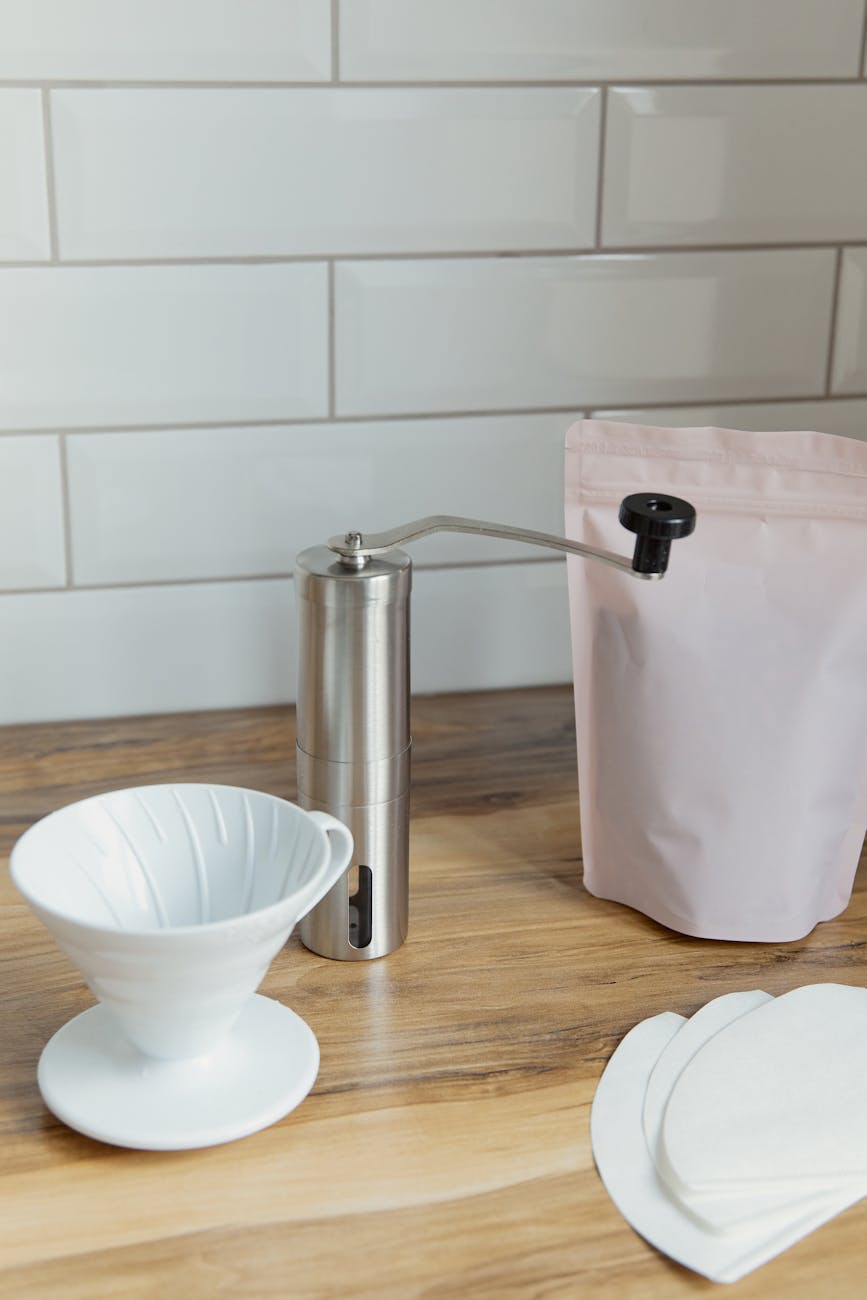
Most drip coffee makers rely on paper filters, whether cone-shaped or basket-style. This is where the magic of a clean cup happens.
- Impact on Taste: Paper filters are highly effective at trapping coffee oils and virtually all fine sediments. The result is a cleaner, brighter, and crisper cup with a lighter body and a more pronounced acidity. This allows the delicate nuances of the coffee’s flavor profile to shine through, unmasked by sediment or heavy oils. It’s the preferred method for showcasing the intricate aromatics of lighter roasts and single-origin beans.
- Health Considerations: By trapping those oils, paper filters significantly reduce the diterpene levels (cafestol and kahweol) in your brewed coffee. For individuals concerned about cholesterol, switching from an unfiltered method like French Press to a paper-filtered drip coffee can be a simple dietary adjustment that offers potential health benefits.
- Environmental Aspect: While disposable paper filters are convenient, they generate waste. Reusable mesh filters are available for drip machines, offering a compromise between filtration and environmental impact, though they might allow slightly more sediment and oils than paper.
For a deeper dive into the health implications and scientific nuances of diterpenes, consult our detailed article on coffee and health.
Beyond the Basics: Brewing Parameters for Your Best Coffee
Even with the perfect beans and grind, your coffee can fall flat if you don’t nail the fundamental brewing parameters. Think of it as a recipe: the ingredients are important, but the technique makes all the difference. Mastering these variables allows you to consistently achieve that “best coffee” experience, whether it’s from your French Press or drip machine.
How can I achieve the ‘best coffee’ from both a French Press and a drip coffee maker, focusing on grind, water temperature, and brewing time?
Water Temperature: The Golden Range (195-205°F / 90-96°C)
This is a non-negotiable for delicious coffee. Water that’s too cool won’t extract enough flavor, leaving you with a sour, under-extracted cup. Water that’s too hot can scorch the grounds, pulling out bitter, unpleasant compounds.
- Why it Matters: Aim for water between 195-205°F (90-96°C), just off the boil. This range is optimal for dissolving the desirable compounds in coffee—the acids, sugars, and aromatic oils—without extracting the harsher, bitter elements. If you don’t have a temperature-controlled kettle, simply bring your water to a rolling boil, then let it sit for about 30-60 seconds before pouring.
Water Quality: Filtered Water is Key
Your coffee is over 98% water, so its quality profoundly impacts the taste. Tap water, especially if it’s hard or contains chlorine, can introduce off-flavors that mask the delicate notes of your coffee.
- Why it Matters: Use filtered water whenever possible. This ensures a clean, neutral base that allows the true flavors of your coffee to shine through.
Brewing Time: Method-Specific Sweet Spots
This is where the distinct characteristics of French Press and Drip really come into play.
- French Press: For immersion, a brewing time of 3-5 minutes is generally recommended.
- Too short: Under-extracted, sour, weak.
- Too long: Over-extracted, bitter, astringent.
- Tip: Many experts swear by exactly 4 minutes for optimal balance. Start there and adjust to your taste.
- Drip Coffee: Brewing time for drip coffee depends heavily on your machine and the volume of coffee. For a standard pot (e.g., 8-12 cups), aim for a total contact time of 5-8 minutes. High-quality drip machines are designed to hit this sweet spot. If your machine is much faster or slower, it might be compromising extraction.
Coffee-to-Water Ratio: The ‘Golden Ratio’ and Personal Preference
The amount of coffee you use relative to water is fundamental. The “Golden Ratio” is a widely accepted starting point, but don’t be afraid to tweak it!
- The Golden Ratio: A common recommendation is 1:15 to 1:18 (e.g., 1 gram of coffee to 15-18 grams of water).
- For example, for a 300ml (approx. 300g) cup, you’d use about 17-20 grams of coffee.
- Personal Preference: If you prefer a stronger cup, use a slightly higher coffee-to-water ratio (e.g., 1:15). For a lighter brew, go a bit lower (e.g., 1:18). Consistency is key, so using a kitchen scale for your beans is a game-changer.
Pre-infusion/Blooming: Importance for Fresh Coffee
This step is particularly crucial for freshly roasted coffee, especially in drip or pour-over methods, but can also be applied to French Press.
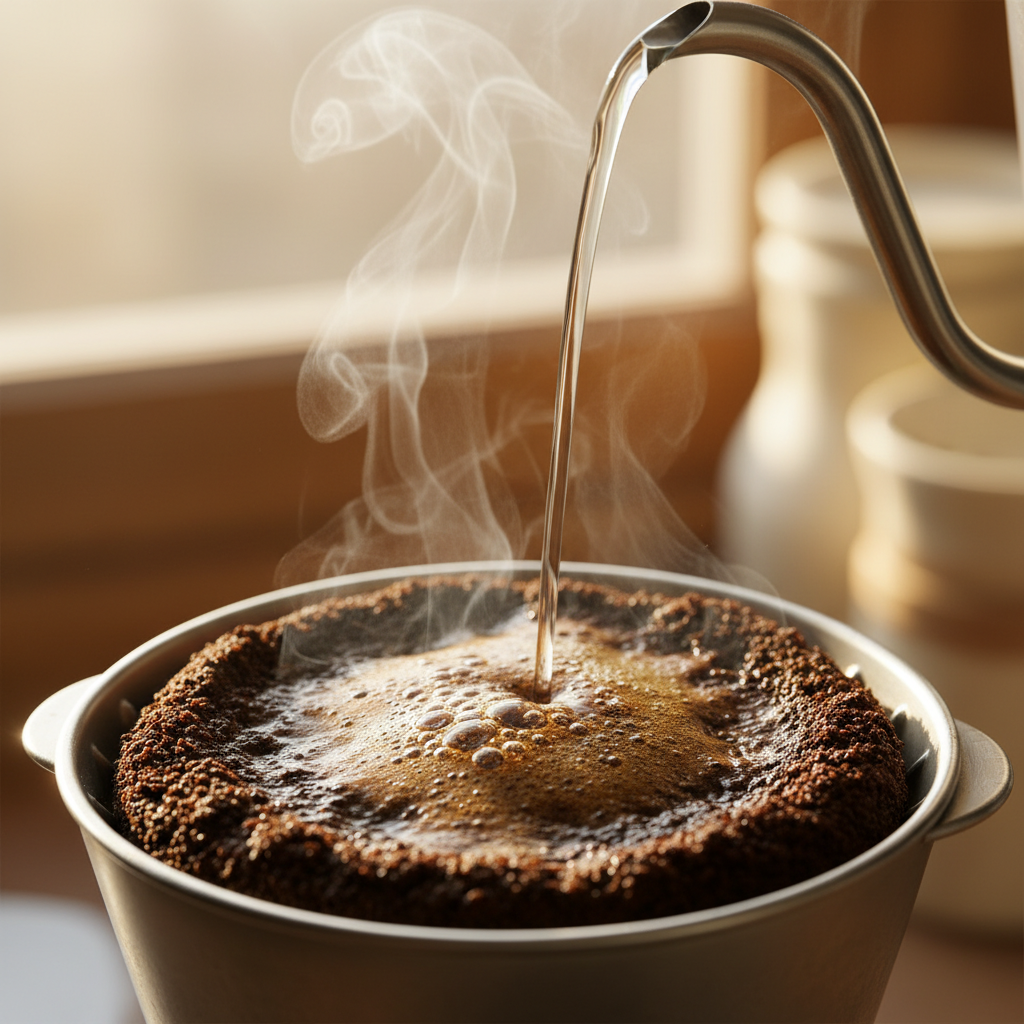
- What it is: Pour a small amount of hot water (about twice the weight of your coffee grounds) over the grounds, just enough to saturate them. Let it sit for 30-45 seconds.
- Why it Matters: This allows the coffee to “bloom” as trapped CO2 gas escapes. Degassing ensures even saturation and extraction during the main brew, preventing channeling and improving flavor. If your coffee doesn’t bloom, it might be a sign that it’s not as fresh as it could be!
To master these measurements and fine-tune your ratios for any brew, our guide to mastering coffee brewing ratios is your next step.
Pros and Cons: A User-Centric Decision Guide
Choosing between a French Press and a Drip Coffee maker isn’t just about taste; it’s also about convenience, lifestyle, and what you prioritize in your daily coffee ritual. Let’s break down the advantages and disadvantages of each, so you can make an informed decision that truly suits you.
What are the pros and cons of each brewing method, considering factors like ease of use, cleanup, and the impact of filter types?
French Press: Advantages
- Full-bodied Flavor: This is the top draw. The immersion method and metal filter allow more oils and fine solids into your cup, resulting in an incredibly rich, robust, and often sweeter taste with a luxurious mouthfeel.
- Robust Aroma: The extended contact time and lack of paper filtration preserve more of the volatile aromatics, leading to a more intense and complex aroma.
- No Paper Filters Needed: Environmentally friendly and cost-effective in the long run, as you don’t need to purchase disposable filters.
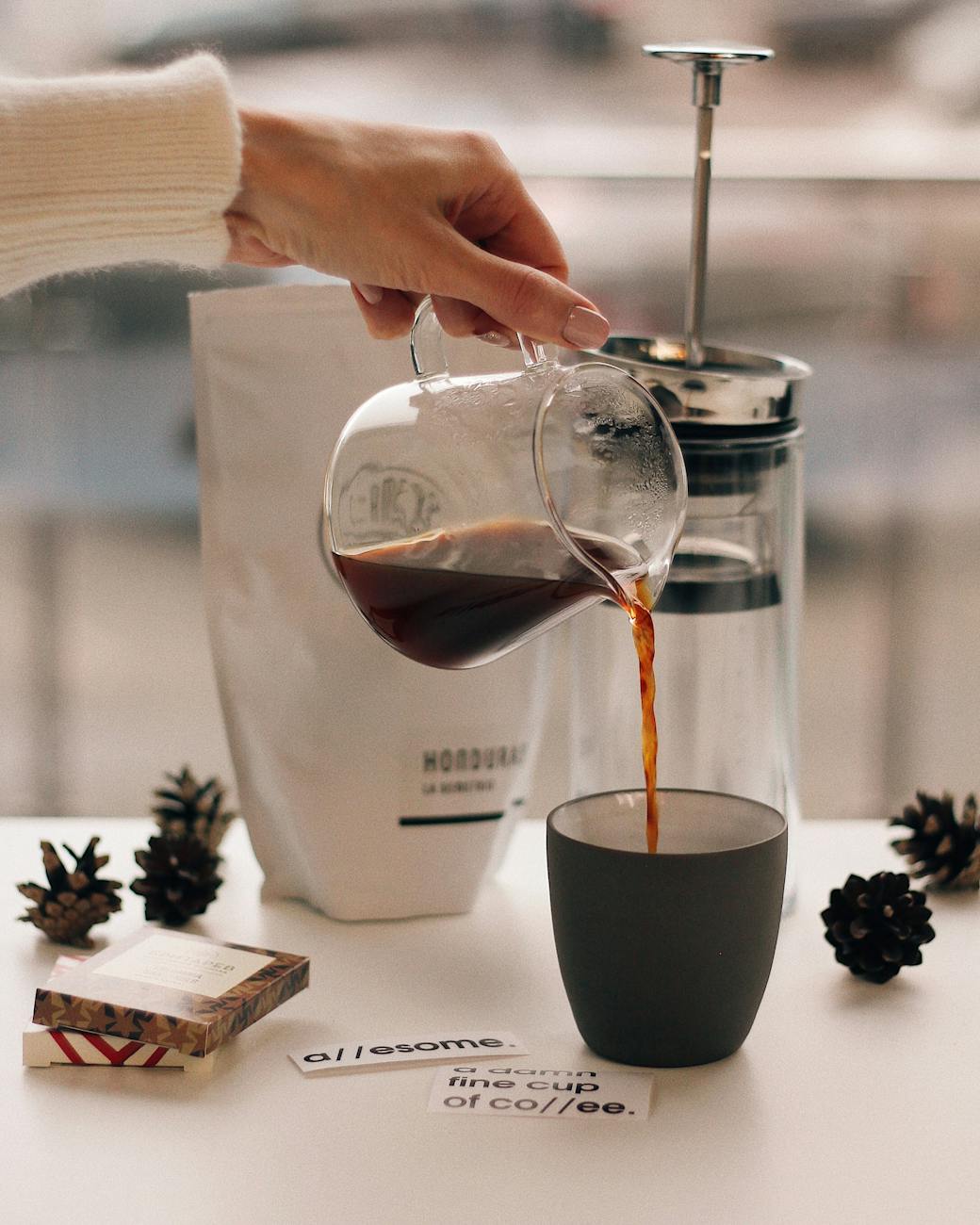
- Portability & Simplicity: A French Press is typically a simple glass or metal carafe with a plunger. No electricity needed (beyond heating water), making it great for camping, travel, or minimalist kitchens.
- Full Control: You have complete command over brew time, allowing you to fine-tune the extraction to your preference.
French Press: Disadvantages
- Potential for Sediment: While some love the “chewiness,” others dislike the fine silt that can accumulate at the bottom of the cup.
- Longer Cleanup: Cleaning the mesh filter and carafe, especially getting rid of stubborn grounds, can be a bit more involved than just tossing a paper filter.
- Inconsistent Temperature Retention: Glass French Presses can lose heat quickly, impacting extraction if not preheated or insulated.
- Not Ideal for Quick Batches: While brewing time is 3-5 minutes, the total process from grinding to pouring can feel longer than pressing a button.
Drip Coffee: Advantages
- Convenience & Ease of Use: The ultimate “set and forget” method. Add water and grounds, press a button, and return to a full pot. Perfect for busy mornings.
- Clean Cup: The paper filter removes oils and sediments, resulting in a bright, clean, and crisp cup that allows delicate flavors to shine.
- Consistent Results: Modern drip machines are often designed to maintain optimal water temperature and flow, leading to highly repeatable brews.
- Large Batch Brewing: Most drip machines are built to brew multiple cups, making them ideal for households with several coffee drinkers or for entertaining.
Drip Coffee: Disadvantages
- Less Control Over Extraction: While convenient, you have less direct control over brew time, temperature (unless it’s a high-end model), and flow rate compared to manual methods.
- Reliance on Machine Quality: The quality of your drip coffee is heavily dependent on the quality of your machine. Cheaper models often struggle with temperature consistency.
- Paper Filter Waste/Cost: Disposable paper filters contribute to waste and are an ongoing expense.
- Potentially Muted Flavors: While clean, the filtration can sometimes strip away some of the heavier, richer oils that contribute to a coffee’s body and depth.
Method Comparison at a Glance
| Feature | French Press | Drip Coffee |
|---|---|---|
| Brewing Method | Full Immersion | Percolation |
| Grind Size | Coarse | Medium |
| Filter Type | Metal Mesh | Paper (typically) |
| Flavor Profile | Full-bodied, rich, bold, sediment-rich | Clean, crisp, bright, nuanced, clear |
| Health (Diterpenes) | Higher levels | Significantly lower levels |
| Ease of Use | Manual control, more involved | Automatic, “set and forget” |
| Cleanup | More hands-on, can be messy | Easy (discard paper filter) |
| Ideal Beans | Medium to Dark roasts, chocolaty, nutty | Light to Medium roasts, fruity, floral, citrusy |
Lifestyle Considerations: Speed, Cleanup, Taste Preference, Budget
When making your choice, think about:
- Speed: Do you need coffee now, or do you enjoy a ritual?
- Cleanup: How much effort are you willing to put into post-brew cleaning?
- Taste Preference: Do you crave bold and rich, or clean and crisp?
- Budget: High-quality drip machines can be an investment, while a good French Press is generally more affordable.
The best coffee maker is truly the one that fits seamlessly into your life and consistently delivers the cup you love. To discover which specific coffee maker best suits your needs, explore our comprehensive buyer’s guide.
Frequently Asked Questions
Is French Press coffee stronger than drip coffee?
French Press coffee often tastes stronger due to its full-bodied nature and the presence of more suspended solids and oils, which contribute to a richer mouthfeel. However, “strength” (referring to caffeine content) can vary widely based on the coffee-to-water ratio used in each method. If you use the same coffee-to-water ratio, the caffeine content per serving might be similar, but the perceived intensity in a French Press will likely be higher.
Can I use any coffee beans for both French Press and drip coffee?
While you can technically use any beans, certain beans and roast levels will perform better in each method. Darker, bolder roasts often shine in a French Press, emphasizing their rich, full-bodied characteristics. Lighter, more aromatic roasts tend to be exceptional in drip coffee, where their delicate nuances and acidity can be highlighted by the cleaner filtration. Experimentation is always encouraged!
How does coffee filter type (paper vs. metal) impact health?
The filter type significantly impacts the presence of diterpenes (cafestol and kahweol), natural compounds in coffee that can raise LDL cholesterol. Paper filters in drip coffee makers effectively trap these diterpenes, resulting in a brew with significantly lower levels. Metal mesh filters, used in French Presses, allow diterpenes to pass through, meaning French Press coffee typically contains higher levels. For individuals concerned about cholesterol, paper-filtered coffee may be a more beneficial choice.
The Final Sip: Which Method Reigns Supreme for You?
We’ve journeyed through the distinct worlds of Drip Coffee and French Press, dissecting their unique approaches to extraction, the critical role of grind size, how to select the ideal beans and roast levels, and even the fascinating implications of filter types on taste and health.
Let’s recap the key differences:
- Extraction: French Press uses full immersion for a rich, bold brew; Drip uses percolation for a cleaner, brighter cup.
- Grind: Coarse for French Press to prevent over-extraction and sludge; Medium for Drip to ensure balanced flow and extraction.
- Beans: Medium to dark roasts often excel in French Press, enhancing body and richness. Light to medium roasts shine in Drip, highlighting clarity and nuance.
- Filters: French Press’s metal mesh allows oils and fines, contributing to body but higher diterpenes. Drip’s paper filter yields a clean cup with lower diterpenes.
- Taste Profiles: French Press delivers full-bodied, rich, bold flavors; Drip offers clean, crisp, bright, nuanced notes.
So, which brew reigns supreme? The truth is, the crown isn’t fixed – it’s woven from your unique preferences, lifestyle, and even health considerations. We’ve armed you with the scientific insights into why French Press delivers that bold, rich embrace, while Drip offers a clean, bright clarity. We’ve decoded the magic of grind and the mystery of diterpenes.
Now, the real adventure begins. Don’t just pick a side; explore. Grab a new bag of beans, adjust your grind, and try brewing it both ways. Note the subtle shifts in aroma, the lingering notes on your palate, the very feel of the coffee. Could you be a Drip devotee on busy weekdays and a French Press aficionado for languid weekends? Absolutely. Your perfect cup isn’t a destination; it’s an ongoing, delicious discovery. What’s the next experiment you’ll try to unlock your ultimate coffee experience?
Ready to venture beyond? Explore our guide to alternative brewing methods, including Pour Over, Aeropress, and Espresso, to broaden your horizons.