The Unsung Hero: Unlocking Perfect Coffee Flavor with Optimized Brewing Water at Home
You meticulously choose your beans, invest in a quality grinder, and master your brewing technique. Yet, sometimes, that elusive perfect cup remains just out of reach. Often, the overlooked culprit is water – the unsung hero that constitutes over 98% of your coffee. Its quality isn’t just a minor detail; it fundamentally dictates extraction efficiency and the final flavor profile of every single brew.
For home coffee enthusiasts and aspiring baristas eager to truly elevate their daily cup, understanding water is the ultimate secret weapon. This guide will demystify the science of brewing water, reveal precisely why specific characteristics matter, and provide practical, actionable blueprints for optimizing your water at home. We’ll delve into the strategies of world champions, reference Specialty Coffee Association (SCA) standards, and share precise DIY water recipes, empowering you to unlock the full, vibrant potential hidden within every coffee bean.
Understanding Coffee Water Chemistry: The Scientific ‘Why It Matters’
Brewing water chemistry refers to the specific composition of minerals and dissolved solids in water, which critically influences how flavor compounds are extracted from coffee grounds and ultimately impacts the coffee’s taste, aroma, and mouthfeel.
To truly master your brew, you need to understand the fundamental science behind how water interacts with coffee grounds. It’s not just H₂O; it’s a complex solvent carrying various minerals and compounds that either aid in extracting delicious flavors or contribute to off-notes.
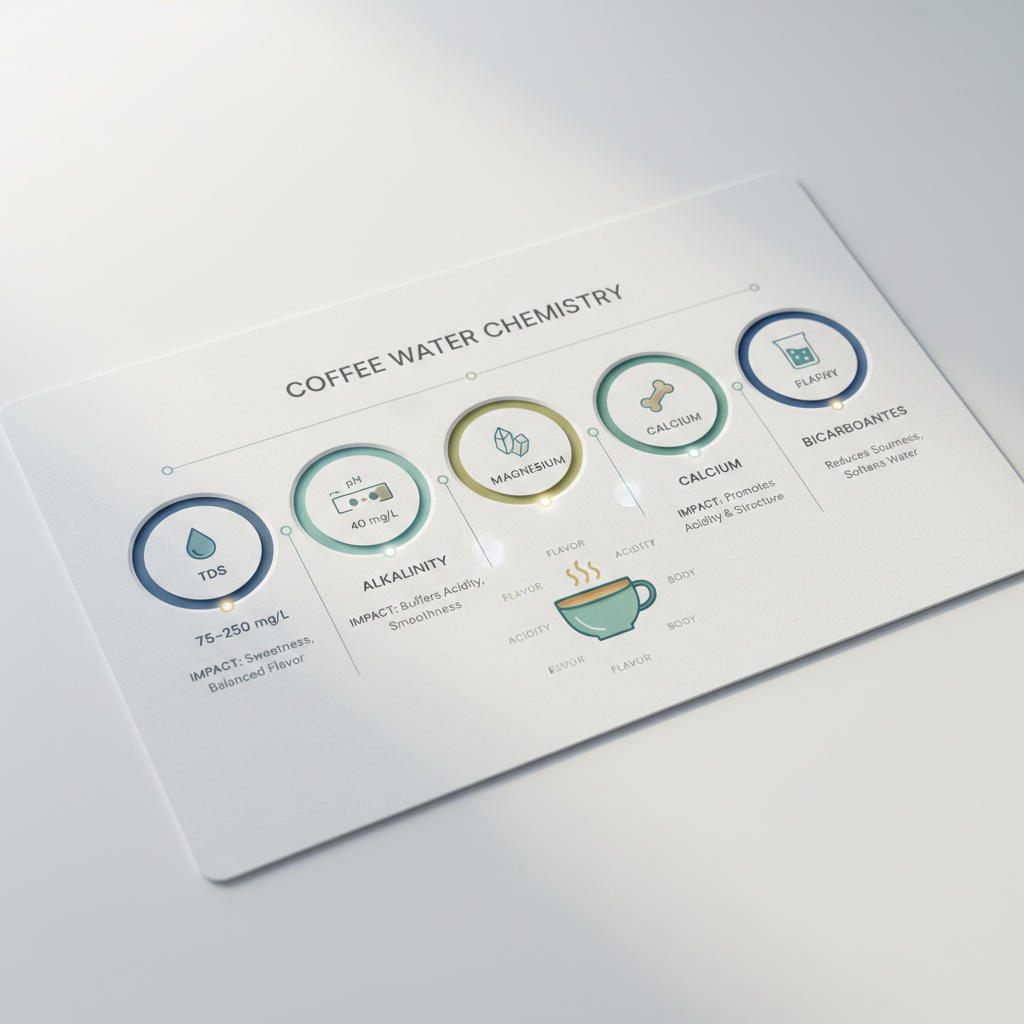
Total Dissolved Solids (TDS)
Imagine TDS as the “mineral richness” of your water. It measures the total concentration of dissolved inorganic and organic substances in water. For coffee, this is critical because these dissolved solids are what enable the water to extract flavor compounds from your coffee grounds.
- Optimal Ranges: The SCA recommends an optimal TDS range of 75-250 mg/L for brewing water.
- Impact on Extraction:
- Low TDS (e.g., distilled water): Water is “hungry” and aggressive, extracting too quickly. It often results in flat, sour, or overly acidic coffee because it lacks the minerals to buffer and bond with desirable flavor compounds. It can also be corrosive to your brewing equipment over time.
- High TDS (e.g., very hard tap water): Water is “full” and less efficient at extraction. This can lead to underextraction, a dull or bitter taste, and cause significant scale buildup in your equipment, impeding heating and consistent flow.
Alkalinity (Buffering Capacity)
Alkalinity, often measured in terms of bicarbonates, refers to water’s ability to resist changes in pH. In coffee brewing, it acts as a buffer against the acids naturally present in coffee, which are crucial for a vibrant taste.
- Role in Flavor Balance:
- High Alkalinity: Can over-neutralize desirable coffee acids, making the coffee taste flat, dull, or chalky. It mutes bright, fruit-forward notes and can enhance perceived bitterness, leading to an overextracted perception.
- Low Alkalinity: Without sufficient buffering, the natural acids in coffee can dominate, leading to an overly sour or sharp taste, even if the extraction is otherwise good.
- Desired Levels: The SCA suggests a total alkalinity of 40 mg/L as CaCO₃ (calcium carbonate equivalent).
Mineral Content: The ‘Flavor Makers’
Specific minerals play distinct roles in how your coffee tastes. Think of them as tiny flavor architects.
- Magnesium (Mg²⁺): This is often considered the star mineral for coffee. Magnesium ions are excellent at binding with the desired flavor compounds in coffee, particularly those associated with sweetness and fruitiness. Higher magnesium content (within limits) can enhance perceived sweetness, brightness, and overall body.
- Calcium (Ca²⁺): Calcium contributes to the structure and mouthfeel of coffee, often providing a pleasant weight or texture. However, too much calcium is a primary culprit for scale buildup in brewing equipment, leading to maintenance issues and inconsistent heating.
- Bicarbonates (HCO₃⁻): As mentioned under alkalinity, bicarbonates are crucial for buffering coffee’s acidity. They directly impact how bright or muted the acidic notes in your coffee will be.
The ‘Bad Actors’
Not all dissolved solids are beneficial. Some actively detract from your coffee experience:
- Chlorine/Chloramines: Commonly used to disinfect municipal water, these compounds are notorious for imparting unpleasant, medicinal, or chemical off-flavors (like a swimming pool) to coffee. They are volatile and react negatively with delicate coffee aromatics.
- Heavy Metals (e.g., Iron, Copper): While rare in well-maintained municipal supplies, these can impart metallic or astringent tastes.
- Excess Sodium: Can make coffee taste salty or flat, masking other flavors.
The SCA, through extensive research and sensory analysis, has established clear guidelines for optimal brewing water parameters. Adhering to these standards is a critical step towards consistently excellent coffee.
Pro Tip: According to many coffee experts and organizations, optimal brewing water ideally has around 150 mg/L of total dissolved solids (TDS), with near 10 mg/L of sodium, and 40 mg/L total alkalinity.
Understanding the interaction between these elements is fundamental for making informed adjustments. For a deeper dive into how water specifically influences the chemical process of dissolving coffee solids, you might find our article on The Science of Coffee Extraction: A Deep Dive into Water, Grind & Temperature particularly enlightening.
Decoding Water Types for Coffee Brewing: Pros, Cons, and Common Misconceptions
With so many water options available, choosing the right one can feel overwhelming. Let’s break down the most common types and clarify their suitability for brewing coffee.
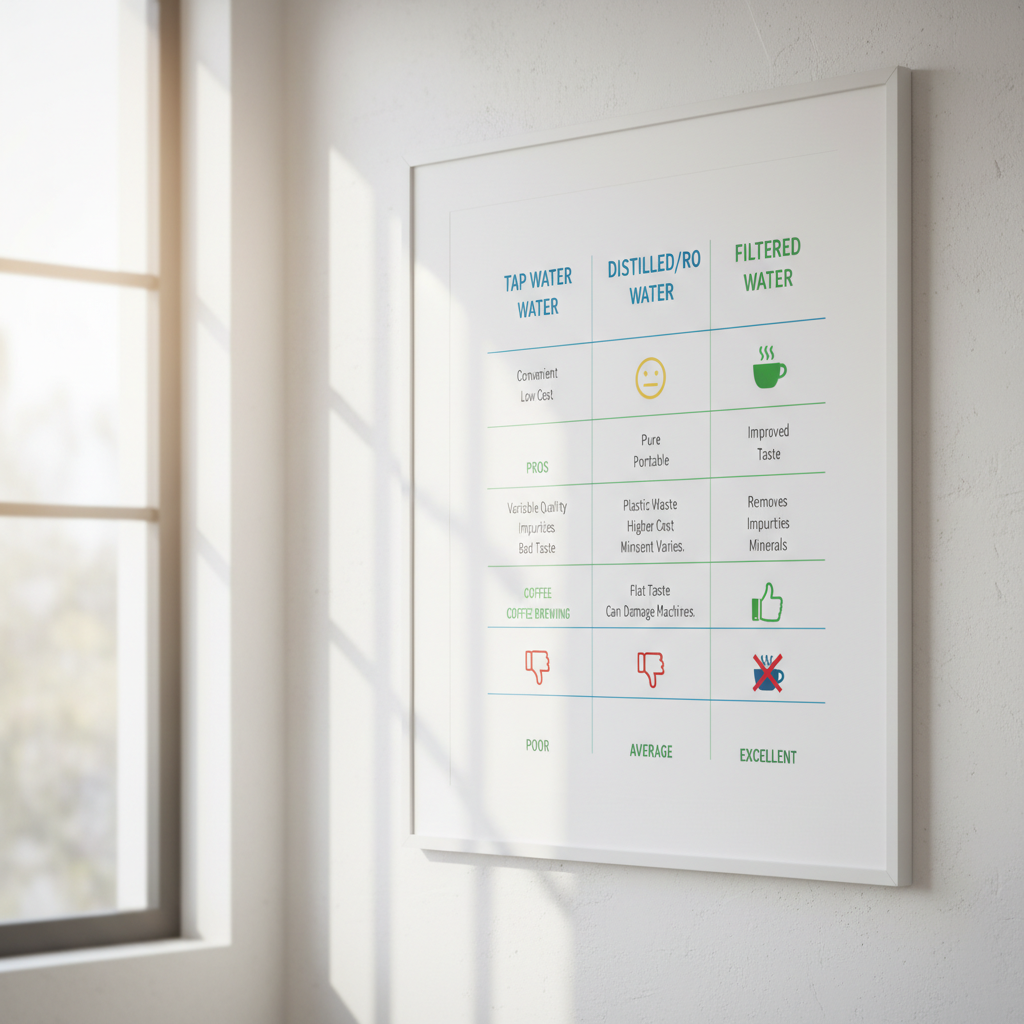
| Water Type | Pros | Cons | Suitability for Coffee Brewing |
|---|---|---|---|
| Tap Water | Convenient, readily available, cost-effective | Inconsistent mineral content, chlorine/chloramines, potential contaminants | Variable (often suboptimal) |
| Bottled Water | Consistent quality (brand-dependent), convenient | Costly, environmental impact, often not optimized for coffee | Variable (often suboptimal) |
| Distilled/RO Water | Perfect blank canvas, removes all impurities | Flat/underextracted coffee if not remineralized, can be corrosive to equipment | Poor (unless remineralized) |
| Filtered Water | Reduces chlorine/chloramines, improves taste | Doesn’t significantly adjust mineral content (TDS, alkalinity) to optimal brewing standards | Better than tap (but limited) |
Tap Water: The Everyday Variable
Tap water is, for most, the default. It’s convenient and usually potable, but its quality is incredibly inconsistent, varying wildly from city to city, and even season to season.
- Pros: Convenient, readily available, cost-effective, often safe to drink.
- Cons:
- Inconsistent Mineral Content: Your local tap water might be too hard (high mineral content, scaling issues) or too soft (low mineral content, flat coffee).
- Chlorine/Chloramines: A common culprit for off-flavors.
- Potential Contaminants: Sediment, heavy metals, or other impurities can affect taste and machine longevity.
- Actionable Advice: Test your tap water! Simple pH strips can give you an idea of acidity, while a TDS meter (easily found online for about $20) will measure total dissolved solids. Basic hardness kits can also provide valuable insights. Knowing your baseline is the first step.
- Tip: Letting tap water sit uncovered for 30 minutes can allow chlorine to off-gas, but this doesn’t work for chloramines.
Bottled Water: The Popular ‘Quick Fix’ (Often Misunderstood)
Many assume bottled water is automatically better for coffee. While some brands are excellent, it’s not a universal truth.
- Pros: Consistent quality (brand-dependent), convenient for travel or when tap water is poor.
- Cons:
- Costly: Can become very expensive for daily brewing.
- Environmental Impact: Single-use plastic bottles contribute to waste.
- Often Not Optimized for Coffee: Many popular bottled waters (e.g., purified drinking water) have very low TDS and mineral content, leading to flat, underextracted coffee. Others might have mineral profiles that are not ideal.
- Recommendations:
- Some specific spring waters might fall within SCA guidelines, but it’s rare.
- The best “bottled water” approach is often using distilled water and adding minerals (more on this below).
- Misconception: “Spring water is always best.” Not necessarily. Spring water can vary as much as tap water in its mineral profile.
Distilled Water & Reverse Osmosis (RO) Water: The ‘Blank Slates’
These waters are essentially pure H₂O, stripped of almost all minerals and impurities.
- Pros: Provides a perfect blank canvas. Removes all impurities, chlorine, and minerals, giving you complete control over your water chemistry.
- Cons:
- Flat, Underextracted Coffee: Lacking essential minerals, these waters produce a lifeless, sour, or watery cup. The water is too aggressive as a solvent but doesn’t have the “building blocks” for good flavor.
- Corrosive: Pure water is a hungry solvent; it can slowly corrode brewing equipment by leaching metals from components.
- Solution: Remineralization is essential. These waters are the starting point for creating perfectly optimized brewing water. You’ll need to add back specific minerals in controlled amounts using concentrates or DIY recipes.
Filtered Water (Basic Filters, Brita, Pur): A Step Up, But Not a Complete Solution
Household water filters are a popular choice and definitely an improvement over unfiltered tap water.
- Pros: Reduces chlorine and chloramines, removes sediment and some aesthetic impurities, improving taste for drinking.
- Cons:
- Doesn’t Adjust Mineral Content: Most basic filters (like pitcher filters) do not significantly alter the mineral profile (TDS, alkalinity) to meet optimal brewing standards. They clean, but don’t optimize.
- Limitations: While great for improving the taste of your drinking water, they are generally not a complete solution for complex water chemistry optimization for specialty coffee.
Soft Water vs. Hard Water vs. Alkaline Water: Clarifying Terminology
- Soft Water: Low mineral content (especially calcium and magnesium). Good for preventing scale, but often too soft for coffee, leading to flat flavors.
- Hard Water: High mineral content. Can be good for coffee if balanced, but often too high, leading to scale and bitter flavors.
- Alkaline Water: Has a higher pH (above 7) and often high buffering capacity. While popular for health, it’s usually detrimental to coffee, muting desirable acids and leading to a dull taste.
Choosing the right water source is crucial, but it requires understanding its unique characteristics. If you’re wondering which specific bottled brands might work best as a starting point before diving into DIY, explore our detailed comparison in Comparing Bottled Waters for Coffee: Which Brands Truly Brew Best?.
Achieving Optimal Brewing Water at Home: Practical Solutions & DIY Guide
Now that we understand the ‘why,’ let’s get to the ‘how.’ Optimizing your brewing water at home is entirely achievable and immensely rewarding.
Water Testing at Home: Know Your Starting Point
Before you can fix your water, you need to know what you’re working with.
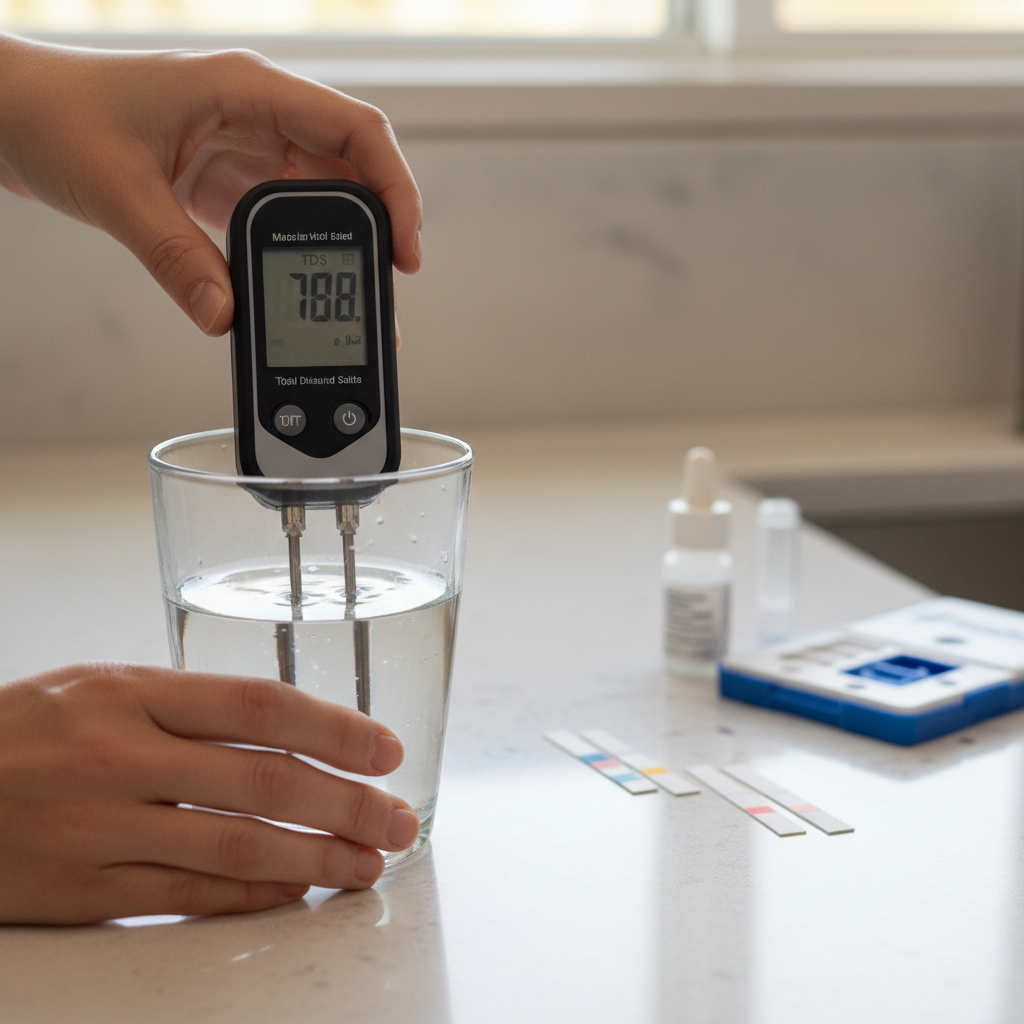
- TDS Meter: This is your most essential tool. Dip it into a glass of water, and it will give you a reading in ppm (parts per million), which is equivalent to mg/L. Aim for 75-250 ppm.
- pH Strips/Meter: Measures acidity/alkalinity. A pH of around 7.0 (neutral) is generally a good starting point for brewing water.
- Hardness Kits: These often measure general hardness (GH) and carbonate hardness (KH) in dGH or dKH. These relate to calcium/magnesium and alkalinity, respectively. While less critical for flavor than TDS and alkalinity, they provide a more detailed mineral breakdown.
Water Treatment Systems for the Home
Depending on your tap water and budget, various systems can help:
- Advanced Filtration Systems (e.g., Activated Carbon, Multi-stage):
- What they target: Excellent for removing chlorine, chloramines, sediment, and often some volatile organic compounds (VOCs).
- Limitations: Most don’t significantly adjust the mineral content (TDS, alkalinity) to optimal brewing levels. They clean but don’t re-engineer.
- Whole-House vs. Point-of-Use Filters:
- Whole-House: Filters all water entering your home, beneficial for showering and washing. More expensive upfront.
- Point-of-Use: Filters water at a specific tap (e.g., under-sink filter). More targeted and generally more affordable.
- RO Systems with Remineralization: The ‘Gold Standard’ for Ultimate Control:
- A reverse osmosis (RO) system produces nearly pure water (like distilled). The key for coffee is to pair it with a remineralization stage or cartridge. This adds back specific minerals (calcium, magnesium, bicarbonates) in controlled amounts, allowing you to hit ideal SCA targets.
- Considerations: These systems can be more expensive, require professional installation (often under-sink), and produce some wastewater. However, for ultimate control and consistent, high-quality brewing water, they are unmatched.
- Water Softeners: Primarily designed to remove calcium and magnesium ions (which cause scale) by exchanging them for sodium ions.
- Benefits for Equipment: Excellent for preventing scale buildup in espresso machines and kettles, extending their lifespan.
- Not Necessarily for Flavor: While good for machines, the high sodium content and altered mineral profile often make the water suboptimal for coffee flavor without further treatment.
DIY Water Blending: The ‘My Own Brewing Water’ Approach
This is where the magic truly happens for home brewers seeking competition-level water quality without an expensive RO system. The principle is simple: start with a “blank slate” (distilled or RO water) and add specific minerals.
How to Create Optimal Water:
You can use commercially available mineral concentrates or common food-grade salts.
- Mineral Concentrates (e.g., Third Wave Water, Aquacode):
- Pros: Convenient, consistent, easy to use, well-researched formulations.
- Cons: Can be more expensive than DIY salts in the long run.
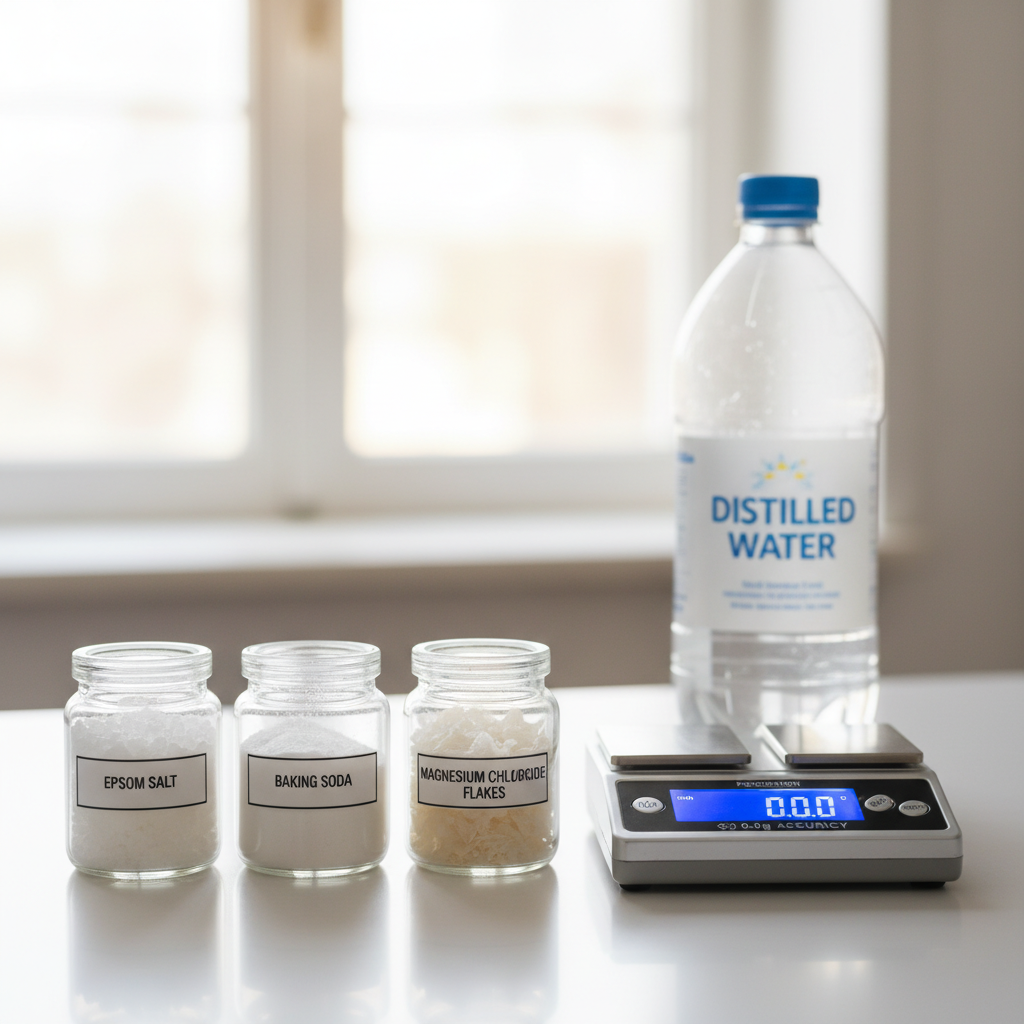
- DIY Recipes using Food-Grade Salts: This allows for ultimate customization and is more cost-effective. You’ll need:
- Distilled Water: Your blank canvas.
- Epsom Salts (Magnesium Sulfate Heptahydrate, MgSO₄·7H₂O): Adds magnesium, enhancing sweetness and body.
- Baking Soda (Sodium Bicarbonate, NaHCO₃): Adds alkalinity (bicarbonates), balancing acidity.
- Gypsum (Calcium Sulfate, CaSO₄): Adds calcium, contributing to structure. (Less common for beginners, Epsom/Baking Soda are a great start).
- Magnesium Chloride (MgCl₂): Another way to add magnesium, often preferred by advanced users for specific ratios.
Step-by-Step DIY Recipe (Simplified for Beginners – “SCA-Lite”):
- Goal: Roughly 100-150 ppm TDS, 40-50 mg/L alkalinity, with good magnesium presence.
- What you’ll need:
- 1 gallon (approx. 3.78 liters) of distilled water.
- Food-grade Epsom Salts (Magnesium Sulfate).
- Food-grade Baking Soda (Sodium Bicarbonate).
- Digital scale accurate to 0.01g (essential!).
- A clean, airtight container for your blended water.
- Recipe:
- Start with the Blank Slate: Pour 1 gallon (3.78L) of distilled water into your clean container.
- Add Magnesium: Weigh out 0.15g (150mg) of Epsom Salts. Add to the distilled water. This will contribute magnesium for sweetness and body.
- Add Alkalinity: Weigh out 0.05g (50mg) of Baking Soda. Add to the distilled water. This will provide buffering for balanced acidity.
- Mix Thoroughly: Cap the container and shake vigorously for a minute or two until all salts are fully dissolved. Allow it to sit for a few minutes, then shake again.
- Test (Optional but Recommended): Use your TDS meter to check the final reading. It should be in the range of 100-150 ppm.
- Brew!: Use this water for your next cup and taste the difference.
- Considerations for Different Coffee Profiles (Quantified Advice):
- Brighter, more acidic coffees (e.g., light roasted Ethiopians): To let more acidity shine, you might slightly reduce baking soda to 0.03-0.04g (30-40mg), or increase Epsom salts to 0.18-0.20g (180-200mg) for enhanced sweetness to balance the acidity.
- Fuller-bodied, darker roasted coffees (e.g., darker roasted Brazilians): To temper potential bitterness and enhance body, you might slightly increase baking soda to 0.06-0.07g (60-70mg) for more alkalinity, or maintain Epsom salts at 0.15g for a robust mouthfeel.
Case Studies: Home Brewers and Competition Baristas
Many World Brewers Cup champions, like 2018 World Brewers Cup champion Emi Fukahori or 2022 World Brewers Cup finalist Anthony Douglas, meticulously craft their water. They often use RO water as a base and then add precise amounts of individual mineral salts to tailor the water to their specific competition coffee, aiming to highlight its unique characteristics. For instance, a common strategy for highlighting delicate floral notes in an anaerobic natural Ethiopian coffee might involve a lower alkalinity water with a specific magnesium-to-calcium ratio (e.g., a TDS of 100-120 ppm with a 2:1 Mg:Ca ratio and bicarbonates carefully tuned to 30-40 mg/L) to prevent acids from being muted while enhancing sweetness. Home brewers, too, have found immense success. Forums and online communities are filled with stories of enthusiasts whose coffee transformed from “good” to “extraordinary” simply by optimizing their water with a DIY blend. The common thread is experimentation, precise measurement, and a keen sense of taste.
The journey to crafting your perfect cup is deeply personal. For a collection of detailed recipes and advanced techniques, dive into our DIY Coffee Water Recipes: How to Craft Your Perfect Brewing Profile.
The Impact on Flavor: How Water Quality Transforms Your Coffee Experience
Ultimately, all this talk about chemistry and minerals boils down to one thing: taste. The right water doesn’t just make coffee good; it unlocks the full, intended spectrum of flavors the roaster meticulously developed.
Extraction Efficiency
Water is the solvent that pulls flavor compounds from your ground coffee. Its composition directly dictates how efficiently and selectively it performs this task.
- Specific Minerals Aid Extraction: Magnesium, in particular, is excellent at binding with various flavor precursors and compounds, facilitating their dissolution into the brew. Calcium also plays a role in overall extraction.
- Hindered Extraction: Water that is too pure (distilled/RO without remineralization) or too hard (excess minerals) will result in poor extraction.
- Too Pure: Leads to rapid, indiscriminate extraction, often pulling undesirable compounds alongside good ones, or failing to fully develop complex flavors.
- Too Hard: Minerals in the water can “compete” with coffee solids for dissolution, hindering the extraction of desired flavors, leaving behind a dull, weak, or bitter cup.
Flavor Profile Development: A Direct Link
The balance of minerals and alkalinity in your water acts like a magnifying glass for certain flavors and a mute button for others.
- Low TDS/Lack of Minerals:
- Taste: Flat, sour, underextracted, watery, lifeless. The vibrant acids are often perceived as harsh, and sweetness is diminished.
- Reason: Insufficient minerals mean the water can’t properly extract and bind with the complex sugars and aromatic compounds, and there’s no buffering to balance acidity.
- High TDS/Excess Minerals (especially high alkalinity):
- Taste: Bitter, overextracted (even if technically underextracted), muddy, chalky, astringent. Bright acidity is often completely absent.
- Reason: Excessive minerals hinder optimal extraction. High alkalinity aggressively neutralizes desirable coffee acids, leading to a dull, bitter cup. High calcium can also contribute to a chalky mouthfeel and significant scale buildup.
- Balanced Water (SCA Standards):
- Taste: Bright acidity that is pleasant and integrated, distinct sweetness, full and silky body, and clearly defined origin characteristics (e.g., berry notes in an Ethiopian, chocolate notes in a Colombian). The finish is clean and lingering.
- Reason: The ideal balance of minerals and alkalinity allows for selective and efficient extraction of desirable compounds, buffers acidity appropriately, and enhances sweetness and body, revealing the coffee’s true potential.
Mouthfeel and Finish
Water also plays a significant role in the tactile sensations of your coffee.
- Mouthfeel: Balanced mineral content contributes to a pleasant, full, and sometimes silky mouthfeel. Water that is too soft can make coffee feel thin or watery, while excessively hard water can lead to a chalky or gritty sensation.
- Finish: The cleanliness and length of the aftertaste are heavily influenced by water quality. Optimal water promotes a clean, lingering finish where desirable flavors gently fade. Off-flavors from poor water quality (chlorine, bitterness) tend to linger unpleasantly.
Experimentation: Taste the Difference
The best way to understand water’s impact is to taste it yourself. Brew the same coffee, with the same grind, dose, and temperature, using:
- Your regular tap water.
- Bottled distilled water (without added minerals).
- Distilled water with a pre-made mineral packet (e.g., Third Wave Water).
You’ll likely be astonished by the profound differences in aroma, acidity, sweetness, body, and overall clarity. This hands-on experience is incredibly enlightening.
Expert Perspective: Identifying Water-Related Flaws
Professional tasters, roasters, and baristas are highly attuned to water-related flaws. They can often diagnose water issues just by tasting the brew. A common tell-tale sign of poor water is a coffee that tastes “flawed” despite all other brewing variables being meticulously controlled. Scott Rao, a renowned coffee expert, extensively discusses these nuances in his work, emphasizing that what we often attribute to “bad beans” or “poor brewing” might, in fact, be a direct consequence of inadequate water.
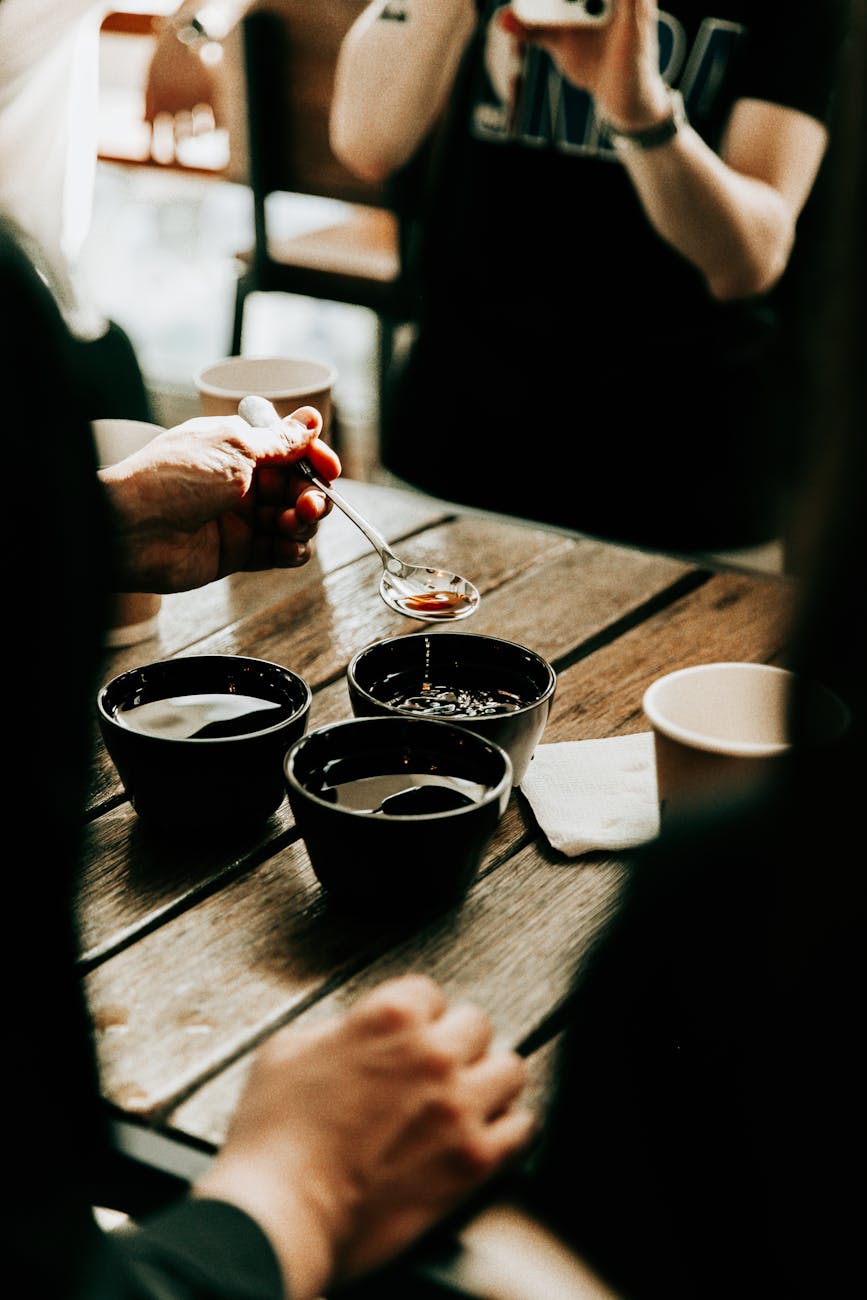
Understanding these sensory connections is key to troubleshooting and perfecting your coffee. If you’ve been battling persistent bitterness or sourness, our guide Beyond Bitterness: Understanding and Fixing Common Coffee Flavor Faults offers comprehensive solutions, including water-related adjustments.
Expert Insights & Industry Recommendations: What the Pros Say
The world of specialty coffee is constantly evolving, and the importance of water is a topic frequently discussed and researched by its leading minds. Incorporating their insights lends significant authority and actionable advice to our understanding.
Quotes and Interviews with Renowned Baristas, Roasters, and Water Chemists
Leading figures in coffee universally acknowledge water’s critical role. Many world champions dedicate as much time to perfecting their water as they do to their grind and brewing technique.
- Matt Perger (World Barista Champion): Often emphasizes that “water is the most important ingredient.” His extensive work on coffee quality frequently highlights specific water chemistry parameters, stressing that even minor mineral adjustments can dramatically alter flavor perception.
- Scott Rao (Coffee Author and Consultant): In his “Demystifying Water for Coffee,” Rao dives deep into the chemical interactions, arguing that machine manufacturers often prioritize scale prevention over flavor optimization. He sheds light on how different mineral compositions directly influence extraction and taste, dispelling common myths that hinder home brewers. His work is instrumental in shifting the focus from simply “clean” water to “optimized” water, advocating for a balanced approach to mineral content.
- World Brewers Cup Champions: These competitors are perhaps the most ardent proponents of precise water control. Champions like Sasa Sestic (known for his innovative water strategies) and other top contenders often spend months before a competition analyzing the specific mineral profile of their chosen coffee and then formulating a custom water recipe to best express its unique characteristics. Their “how I made my own brewing water” insights often involve starting with reverse osmosis water and carefully adding individual mineral salts like magnesium chloride, calcium chloride, and bicarbonates to achieve a specific target profile (e.g., aiming for a TDS of 100-120 ppm with a balanced alkalinity of 30-50 mg/L). Their success often hinges as much on their water strategy as on their brewing device or technique. For instance, the strategies employed by champions brewing a delicate Gesha might focus on very soft water with precise magnesium additions to highlight floral aromatics, while a robust natural processed coffee might benefit from slightly higher alkalinity to balance its inherent fruitiness.
The SCA’s Official Recommendations Revisited
The Specialty Coffee Association (SCA) is the global authority on coffee standards. Their official recommendations for brewing water are not arbitrary; they are the result of extensive research and sensory evaluation by experts worldwide.
- Key Parameters (SCA Handbook):
- Odor: Clean, fresh (free of chlorine, mold, earthy notes).
- Color: Clear.
- TDS: 75-250 mg/L (with a target of 150 mg/L).
- pH: 6.5-7.5 (with a target of 7.0).
- Alkalinity: 40 mg/L as CaCO₃.
- Hardness: 50-175 mg/L (general hardness, with a target of 85 mg/L).
- Sodium: <10 mg/L.
- Chlorine: <0.5 mg/L.
These aren’t just numbers; they are a blueprint for water that allows coffee to taste its best, promoting optimal extraction and balanced flavor development.
Dispelling Myths and Demystifying Complex Water Concepts
Experts continually work to make water chemistry accessible. One common myth is that “zero TDS” water is ideal for coffee because it’s “pure.” As we’ve seen, this leads to incredibly flat, underextracted coffee. Another misconception is that simply filtering tap water with a basic carbon filter will solve all water problems. While it helps with chlorine, it rarely optimizes the mineral content for specialty coffee. The industry’s evolving understanding emphasizes a nuanced approach: it’s not just about removing bad things, but about intelligently adding good things back to craft the perfect solvent.

Learning from those at the pinnacle of the coffee world provides a fast track to understanding. For a deeper dive into the specific water strategies employed by champions, check out our Interviews with Coffee Masters: Secrets to Championship-Winning Brews.
Frequently Asked Questions
Is distilled water good for brewing coffee?
No, distilled water alone is not good for brewing coffee. While it’s pure and free of contaminants, it lacks the essential minerals (like magnesium and calcium) that are crucial for extracting desirable flavor compounds from coffee. Brewing with distilled water often results in a flat, sour, underextracted, and watery cup. It also lacks the buffering capacity to balance coffee’s natural acidity. However, distilled water is an excellent “blank slate” to start with for remineralization, allowing you to create your own optimized brewing water by adding specific mineral salts.
How often should I test my tap water for coffee brewing?
If you’re using tap water, it’s a good practice to test it initially with a TDS meter and pH strips to get a baseline. If your water source is known to be consistent (e.g., municipal water from a large city), testing every 3-6 months, or whenever you notice a significant change in your coffee’s taste, should be sufficient. If you live in an area with variable water quality (e.g., well water, smaller towns with seasonal changes), more frequent testing (monthly) might be beneficial. For DIY water recipes, you should test your blended water each time until you’re confident in your measurements and mixing process.
Can I use regular bottled spring water for coffee?
While better than heavily chlorinated tap water, regular bottled spring water is often not ideal for coffee. Its mineral composition varies widely by brand and source, and most spring waters are not specifically formulated to meet the SCA’s optimal brewing water standards. Some might be too high in minerals (leading to bitterness and scale), while others might be too low (resulting in flat coffee). If you must use bottled water, look for brands that explicitly state their mineral analysis and try to match it to SCA guidelines, or choose purified/distilled water to remineralize yourself.
What is “Third Wave Water” and how does it work?
Third Wave Water (TWW) is a popular commercial product consisting of pre-portioned mineral packets designed to be added to a gallon (or liter) of distilled water. Each packet contains a precise blend of magnesium sulfate (Epsom salt), calcium citrate, and potassium bicarbonate, formulated to create brewing water that meets or closely approximates the SCA’s optimal standards. It’s a convenient and consistent way to achieve excellent brewing water without having to measure out individual salts, making it a favorite among home brewers and professionals alike for its ease of use and reliable results.
Conclusion: Your Path to Consistently Better Coffee Through Water
The journey to consistently brew exceptional coffee is multifaceted, but few elements wield as much influence as water. It’s the silent foundation upon which all other variables—your beans, grind, and brewing method—are built. We’ve seen how understanding water chemistry, from TDS and alkalinity to specific minerals, is not just academic; it directly translates into the vibrant flavors and pleasing textures we seek in our daily cup.
By identifying the characteristics of various water types and, more importantly, by implementing practical solutions—whether it’s home testing, advanced filtration, or crafting your own bespoke water blends—you gain unprecedented control over your brewing outcome. The insights from industry experts and the rigorous standards set by the SCA underscore this truth: optimized water isn’t a luxury; it’s a necessity for unlocking coffee’s full potential.
Don’t let inadequate water hold back your pursuit of coffee perfection. Start today by testing your water, experimenting with simple remineralization techniques, and tasting the profound difference for yourself. Your palate (and your coffee equipment) will thank you.

Ready to take your coffee setup to the next level? Explore our guide to Essential Coffee Brewing Gear: Tools for the Home Barista to find the equipment that complements your newfound water mastery.